Buying guide · your first machine

The best espresso machine for beginners

A beginner machine is not a cheap machine. It is one that gets you to a drink you are proud of in the first week, before your patience runs out, and that still has somewhere to go once your taste catches up.

As an Amazon Associate we earn from qualifying purchases. Links to Amazon on this site are affiliate links — they cost you nothing extra. Read the full disclosure.

Most first espresso machines get returned for the same reason, and it has nothing to do with the machine. The shots taste sour, or they gush out in eight seconds, and the new owner concludes they bought a lemon. What actually happened is that the grind was wrong, and nothing on the box warned them that espresso is the most grind-sensitive thing you can do with coffee.

So a beginner guide that only ranks machines is half a guide. The machine matters, but the order of operations matters more: get something forgiving, pair it with a grinder that can actually do espresso, and accept that your first ten shots are tuition rather than coffee.

The ranking below weights ease of use most heavily, then what the machine is capable of once you are past the first month, then value. Lever machines are excluded: they are wonderful and they are not a first machine.

The picks

Where we would send a first-time buyer

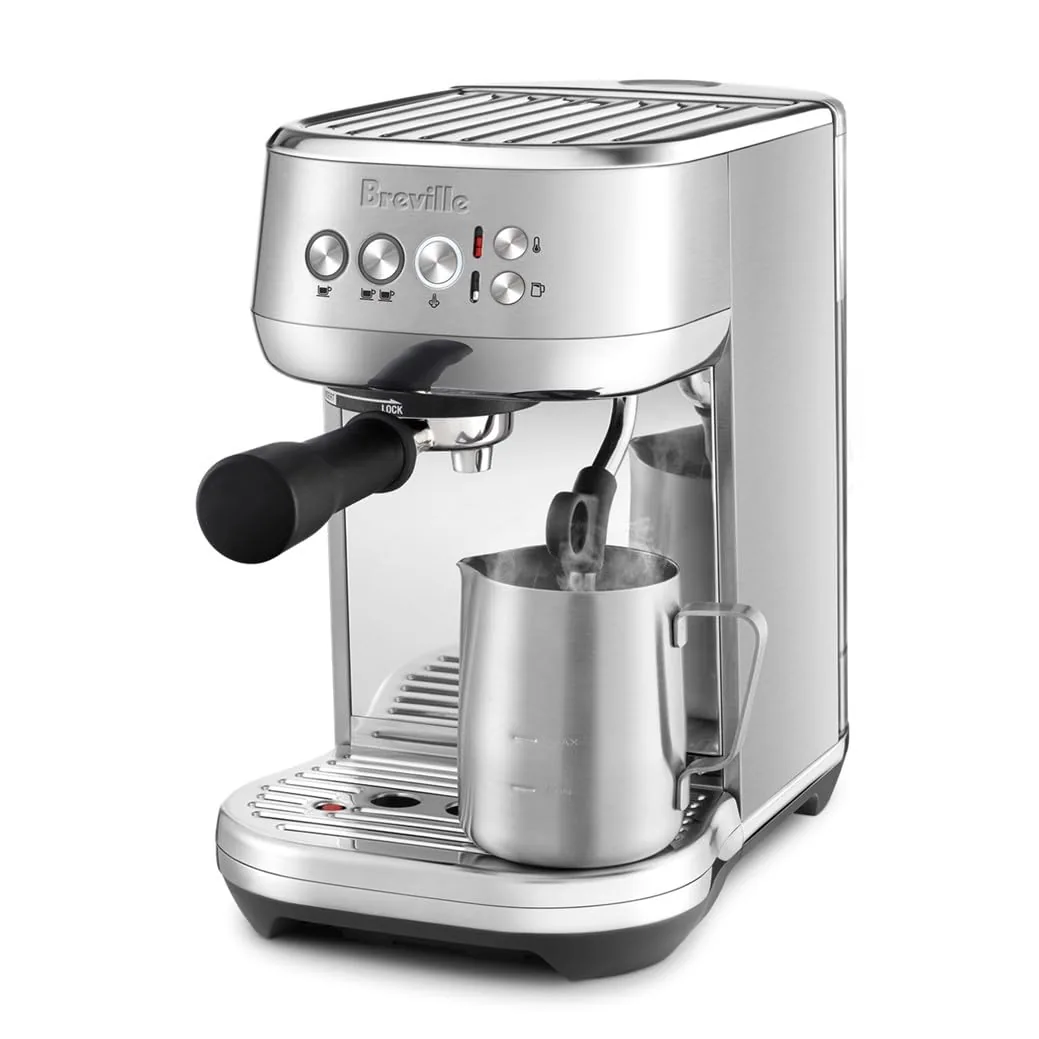
Breville Bambino Plus semi-automatic espresso machine brushed stainless steel
01 · Best first machine

Breville Bambino Plus

4.1(2,408) 7.5/10

It is at brew temperature in about three seconds and it textures milk automatically to a set temperature, which removes the two things beginners get wrong most often. You still pull the shot yourself, so you are learning espresso rather than pressing a button. The catch is real and we would rather say it early: there is no grinder in the box, and the machine is only as good as what you pair it with.

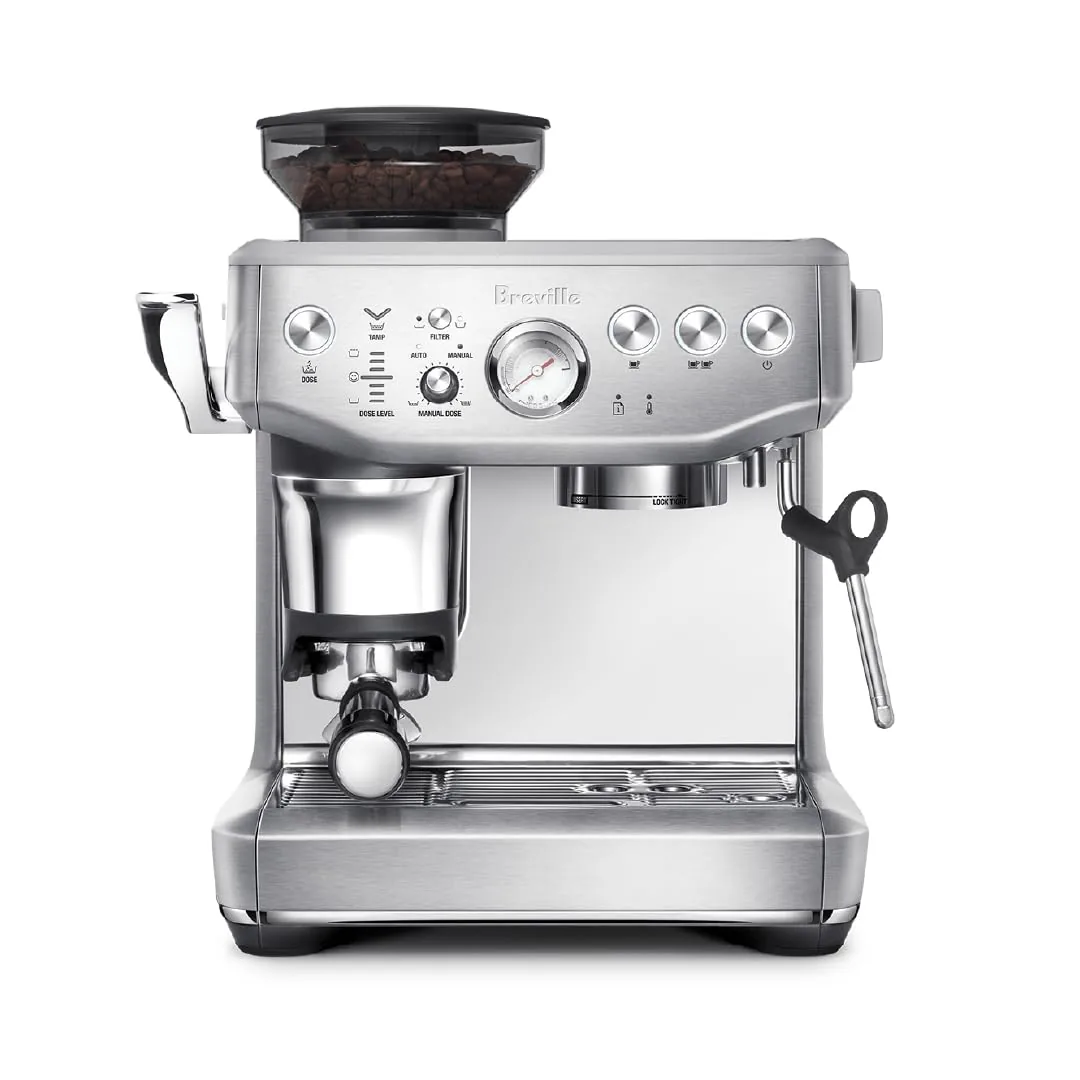
Breville Barista Express Impress semi-automatic espresso machine brushed stainless steel with built-in grinder
02 · Best all-in-one to learn on

Breville Barista Express Impress

4.2(1,103) 7.7/10

Grinder, dose and an assisted tamp in a single box, so the variable that ruins most beginners' shots is handled in the machine instead of on your counter. The Impress system holds your hand through dosing and tamping without pretending the technique does not exist, which is the right trade for someone who wants to improve rather than press a button.

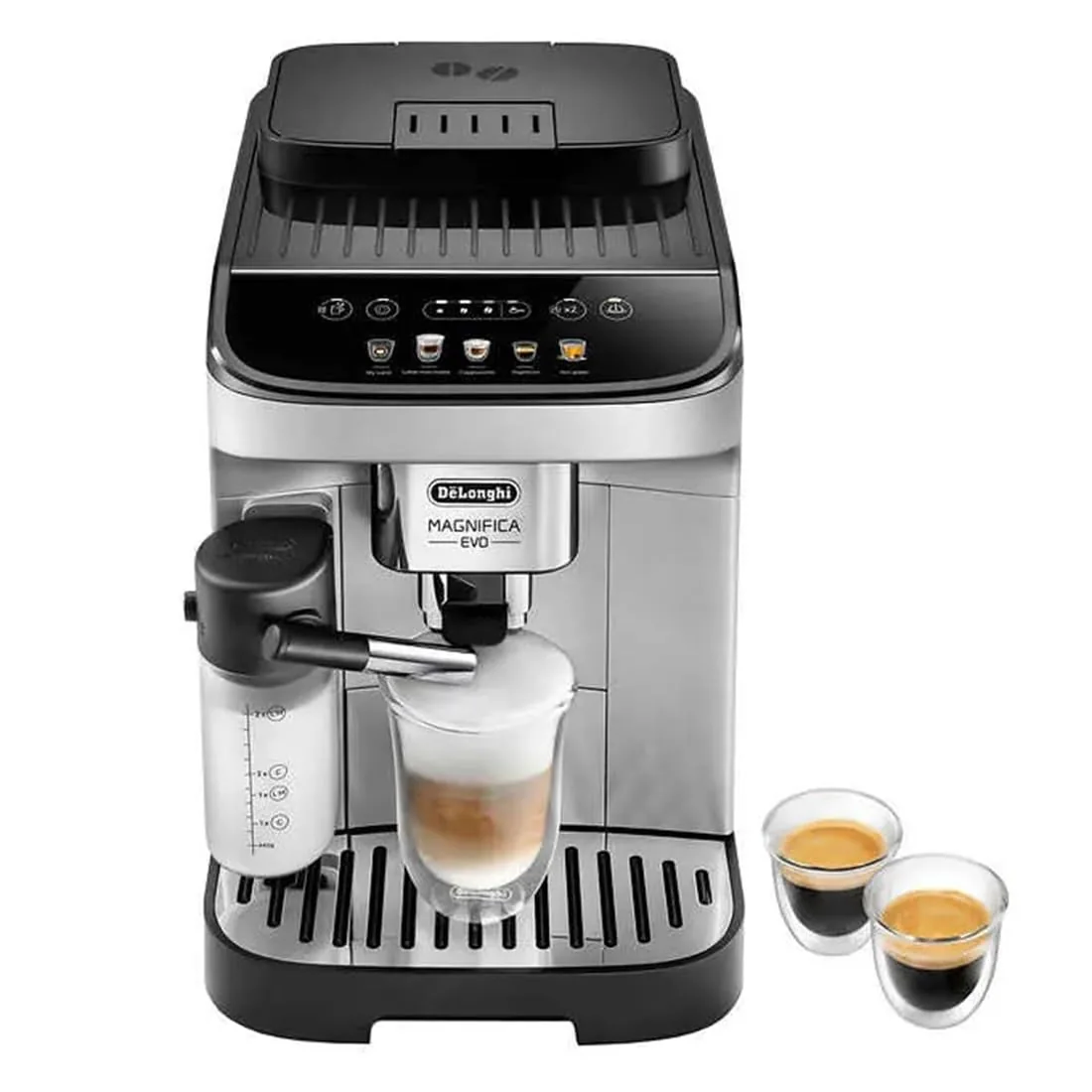
De'Longhi Magnifica Evo super-automatic espresso machine plastic with stainless accents with built-in grinder
03 · Best if you want no technique at all

De'Longhi Magnifica Evo

4.0(72) 6.7/10

Beans in one end, cappuccino out the other, and the milk carafe detaches and goes in the fridge with the milk still in it. The ceiling on cup quality is lower than a semi-automatic and it will not teach you anything about espresso, and for a household that just wants a good milky coffee on a weekday morning that is an entirely reasonable purchase.

The shortlist

Every machine we have reviewed that belongs here

Ranked for this guide: ease of use first, then what the machine can put in the cup, then what it asks of your wallet. The editor score is the site-wide weighted score, the same one on every review.
#MachineEaseEspressoEditor
01 Breville Bambino Plus Semi-Automatic 97 7.5
02 Breville Barista Express Impress Semi-Automatic 88 7.7
03 Breville Barista Express Semi-Automatic 78 7.7
04 Philips 3200 Series LatteGo Super-Automatic 96 6.7
05 De'Longhi Magnifica Evo Super-Automatic 96 6.7
06 Jura E8 Super-Automatic 97 6.9
Put these side by side

How to choose

What actually separates a good first machine from a bad one

Budget for the grinder before you choose the machine

This is the one that costs people money. A machine without a built-in grinder is not finished, and pairing it with a blade grinder will make an excellent machine produce undrinkable espresso, because a blade grinder produces a mix of dust and boulders rather than a consistent particle size. If your total budget is fixed, a machine with a decent grinder built in will beat a better machine plus whatever grinder you can still afford. That single fact reshuffles most beginner shortlists.

Heat-up time is a feature you will use every day

A machine that needs twenty minutes to be stable is a machine you will use at weekends. A thermojet or thermoblock system that is ready in seconds changes espresso from an occasion into a habit, and habit is what makes you good at it. Look at the heat-up figure on the spec sheet before you look at the boiler count.

Automatic milk is either the whole point or a waste

Be honest about which drink you actually make. If it is a flat white every morning, an automatic wand or a carafe system earns its place and removes the skill you would otherwise spend two months acquiring. If you drink espresso black, milk automation is money spent on a feature you will use twice, and that budget belongs in the grinder or in the machine's temperature stability.

Pressurised baskets: helpful at first, a ceiling later

Many beginner machines ship with a pressurised (dual-wall) basket, which fakes crema by forcing coffee through a single small hole. It makes bad grinding produce acceptable results, which is genuinely useful in week one. It also means you are not tasting what the machine can do. Check that the machine can take a standard non-pressurised basket too, so the training wheels come off when you are ready.

Buy for the counter you have

Measure before you order, including the height with the water tank lid open if the machine lives under a wall cabinet, and the depth, which is where super-automatics surprise people. A machine that does not fit gets used somewhere inconvenient, and a machine that is inconvenient stops getting used.
When this guide is the wrong one

If you already grind your own coffee and you know what a dialled-in shot tastes like, skip this page and read the guide for learning properly instead. And if the honest answer is that you want a good coffee with no learning at all, the super-automatic guide will serve you better than anything here.

FAQ

Common questions

Should my first espresso machine have a grinder built in?
If your total budget is fixed, usually yes. A machine with a built-in burr grinder removes the single biggest cause of bad first shots and the single biggest hidden cost. The case for buying a grinderless machine is that a separate grinder can be upgraded independently and tends to outlive the machine, which matters if you expect to still be doing this in five years.
How long before my espresso is actually good?
Expect a week of adjusting the grind before shots are consistent, and a month before milk texturing stops being a lottery. That is normal and it is not the machine. The fastest way to shorten it is to change one variable at a time and to weigh your dose rather than guessing it.
Is a 15 bar pump better than 9 bar?
No. Espresso extracts at roughly 9 bar at the coffee puck, and a 15 or 19 bar figure describes the pump's maximum rating rather than what reaches your coffee. Well-designed machines regulate it down. The number on the box is marketing and it is a poor way to choose between two machines.
Can I make a latte on a beginner machine?
Yes, and the quality of the milk is where beginner machines differ most. An automatic wand gets you a drinkable flat white on day one. A manual wand gets you a better one eventually, because you control the texture, and a worse one for the first few weeks while you learn to hear when the milk is right.
Do I need to descale, and how often?
Yes, and how often depends on your water rather than on the machine. Hard water can mean every couple of months; filtered or softened water can stretch it much further. Scale is the most common reason a cheap machine dies young, and it is entirely preventable.