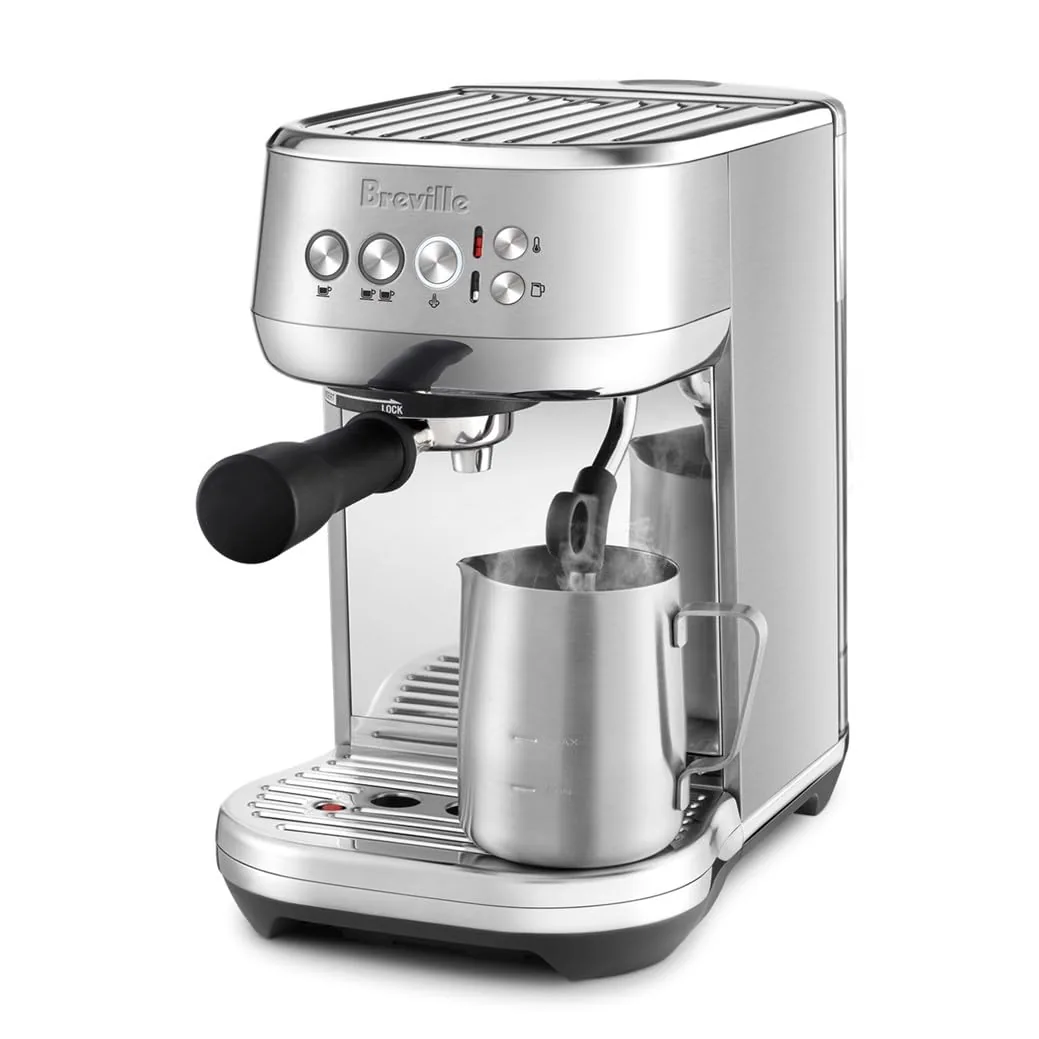
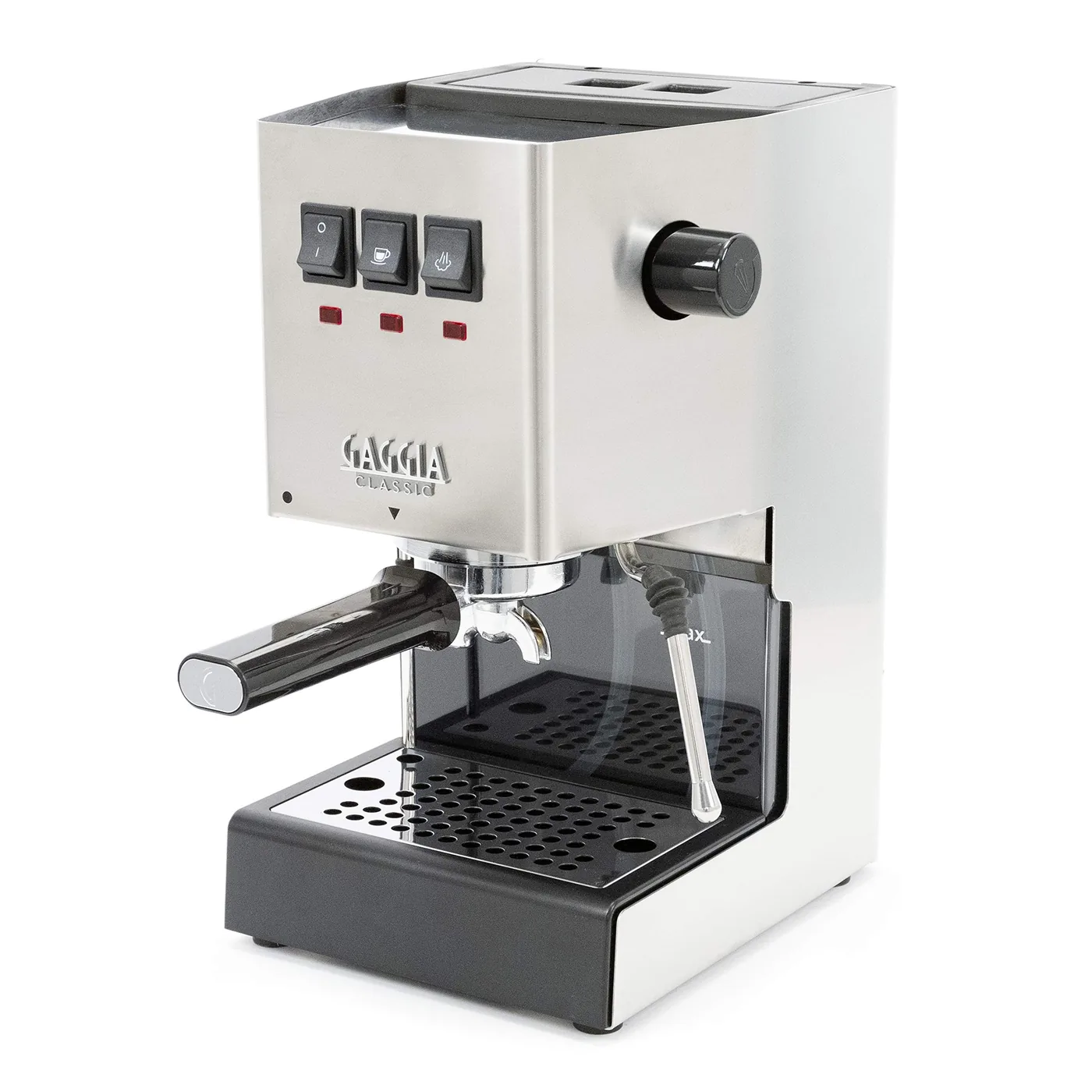
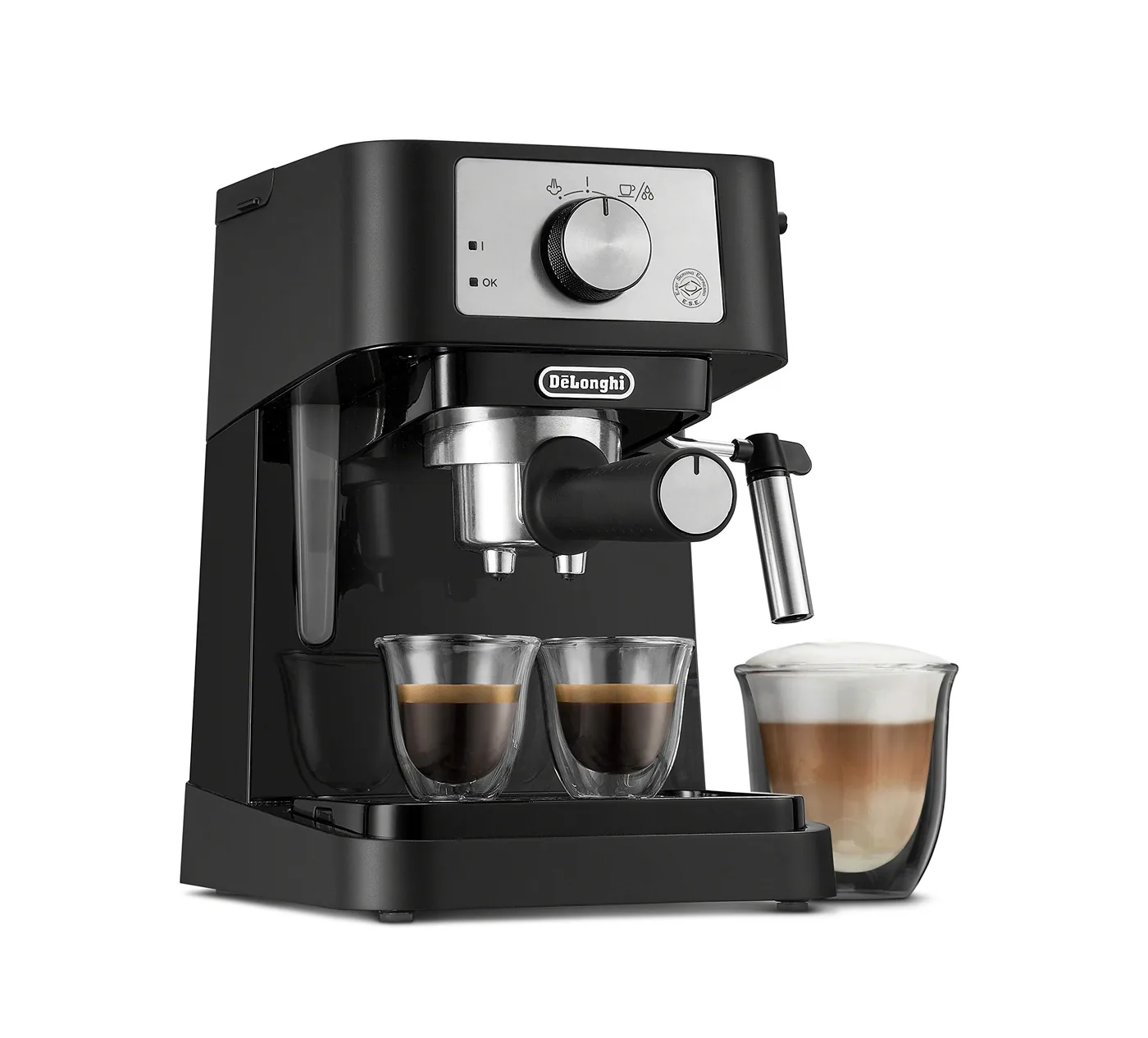
Depth beats width, every time
Width is what the marketing quotes and depth is what makes the machine unusable. Measure from the wall to the front edge of your counter, subtract the depth of anything that hangs above, and use that number as your ceiling. A machine that is 5 cm too deep does not look 5 cm too deep. It looks like a machine you have to drag forward every morning.
Check the height with the lid open
Most water tanks fill from the top. If the machine lives under a cabinet, the number you need is the height with the lid fully open, and manufacturers rarely publish it. Machines with a removable tank that pulls out from the side or the front sidestep the problem entirely, and in a tight kitchen that feature is worth more than any spec on the front of the box.
A grinderless machine needs two footprints
This is the trap in small-kitchen shopping. A 20 cm wide machine that needs a separate grinder occupies more counter than a 30 cm machine that grinds for itself, once the grinder is standing next to it. If space is the binding constraint, price the pair together and measure the pair together.
Cup clearance decides which mugs you can use
Small machines tend to have low clearance under the group head, which means your travel mug does not fit and you decant. If you mostly drink from a tall cup, check the clearance figure on the spec table before anything else, because it is not something you can work around later.
Heat-up time matters more in a small kitchen
Small kitchens tend to belong to people with small mornings. A machine that is ready in seconds gets used daily; one that wants twenty minutes to stabilise becomes a weekend machine no matter how good the espresso is at the end of the wait. Weigh that against cup quality honestly, because it is the difference between a machine you love and a machine you resent.