Buying guide · one-touch coffee

The best super-automatic espresso machine

A super-automatic buys you back four minutes every morning and asks for a cleaning routine in exchange. Which one to get depends almost entirely on how likely you are to keep that bargain.

As an Amazon Associate we earn from qualifying purchases. Links to Amazon on this site are affiliate links — they cost you nothing extra. Read the full disclosure.

People buy super-automatics for the mornings and regret them in the sink. Everything that makes the machine effortless in use, the enclosed brew group, the milk tubes, the grinder feeding straight into a chamber you cannot see, is a surface that coffee oils and milk protein build up on. The machines that last are the ones where that maintenance takes seconds rather than resolve.

So this ranking weights how easy the machine is to keep clean almost as heavily as how easy it is to use. It is the difference between a machine you still like in year three and one that quietly starts producing sour, bitter coffee and gets replaced.

The second thing worth knowing before you buy: these machines are deep. Several of the ones we have reviewed are over 44 cm front to back, because a grinder, a brew group and a milk system have to live in one chassis. Measure from the wall before you choose, not after.

The picks

One-touch machines worth owning

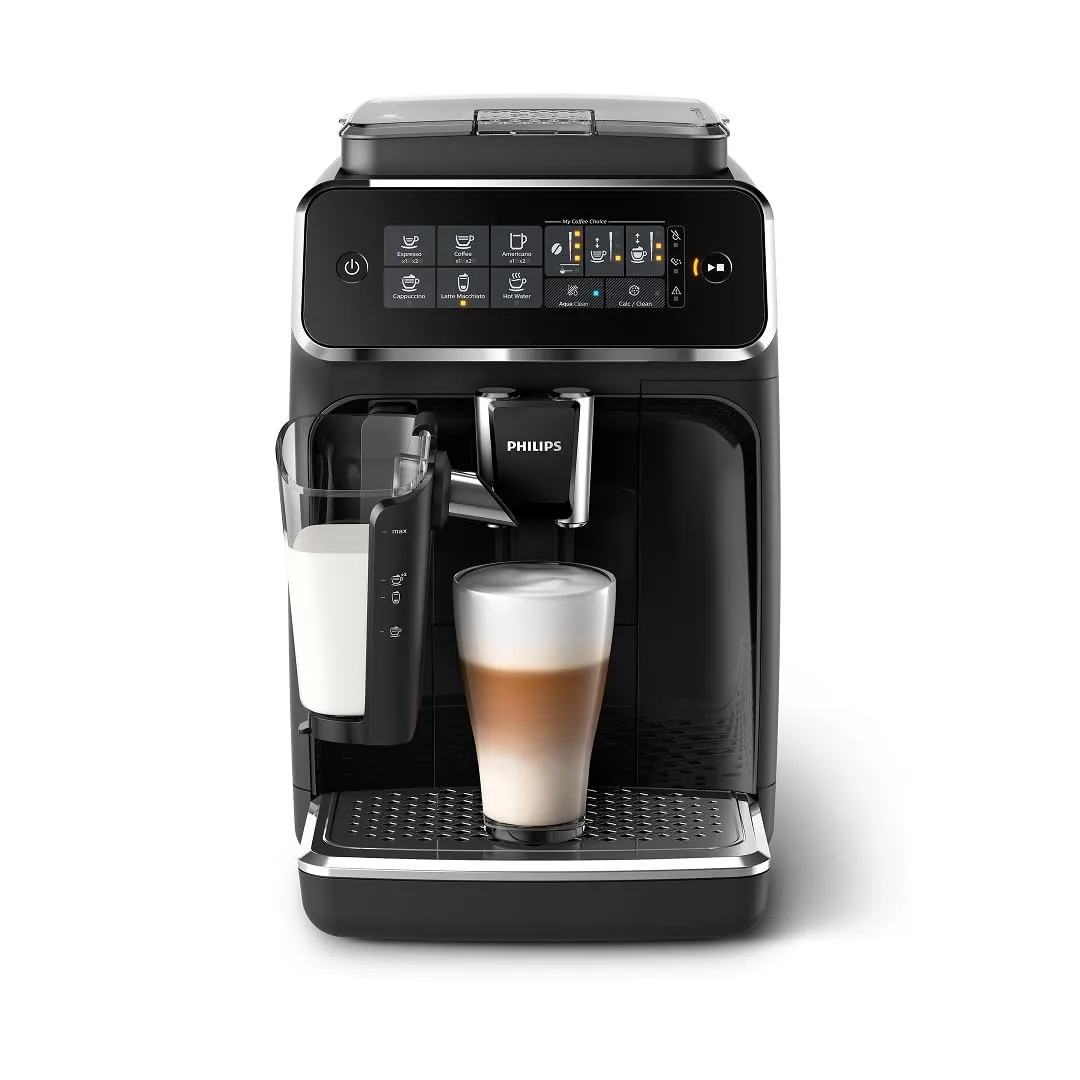
Philips 3200 Series LatteGo super-automatic espresso machine plastic with built-in grinder
01 · Easiest to live with

Philips 3200 Series LatteGo

4.0(6,210) 6.7/10

The LatteGo milk system is two parts with no tubes at all, so it rinses in about fifteen seconds, which is the difference between a milk system that gets cleaned daily and one that does not. Add ceramic burrs that do not heat the grounds and a water filter that stretches the gap between descalings, and this is the least demanding machine on the site to own.

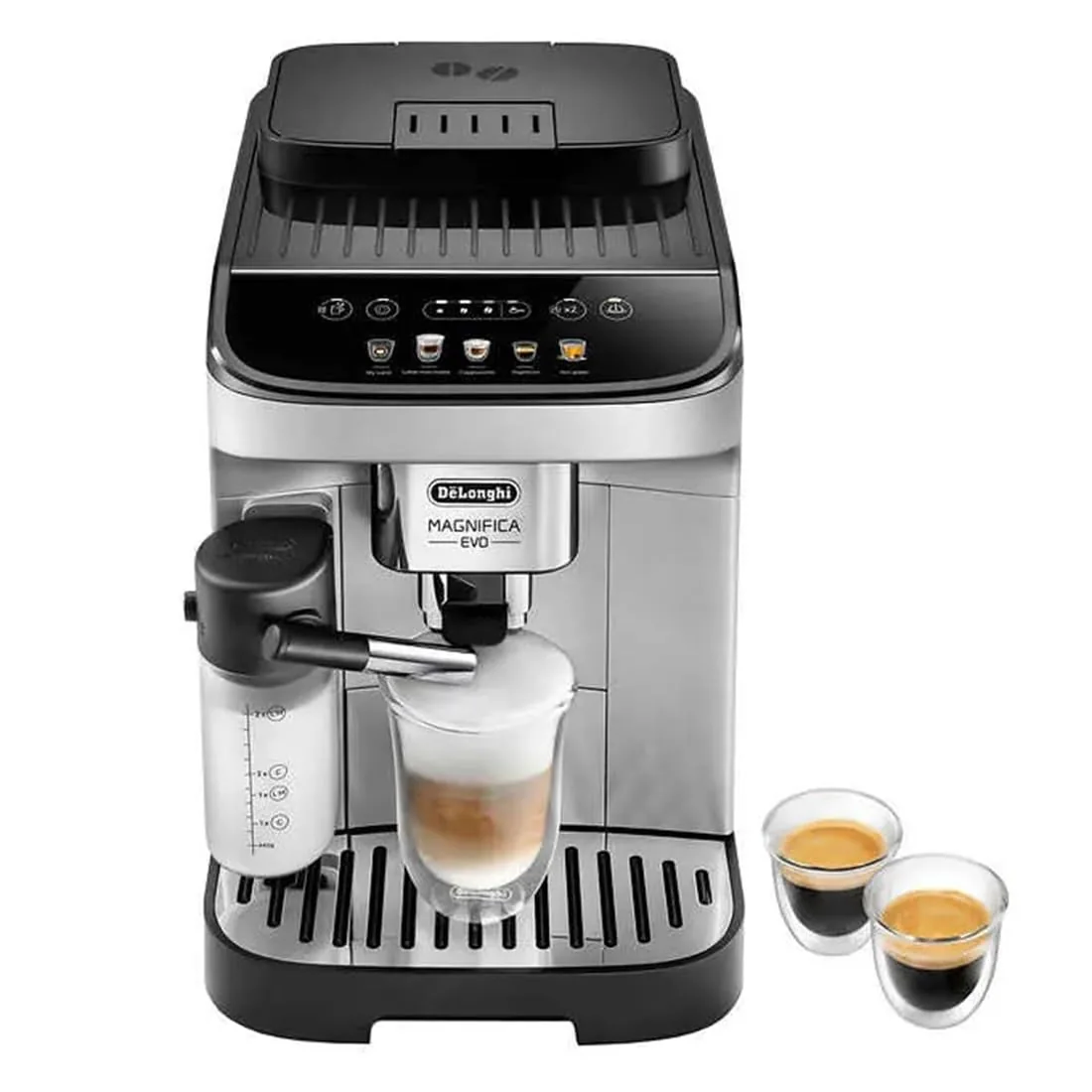
De'Longhi Magnifica Evo super-automatic espresso machine plastic with stainless accents with built-in grinder
02 · Best milk for the money

De'Longhi Magnifica Evo

4.0(72) 6.7/10

The LatteCrema carafe makes a better cappuccino than the price band suggests, and it detaches whole and goes into the fridge with the milk still in it, which removes the excuse not to deal with it. A sensible set of one-touch drinks rather than a menu nobody reads, and a footprint that is merely large rather than enormous.

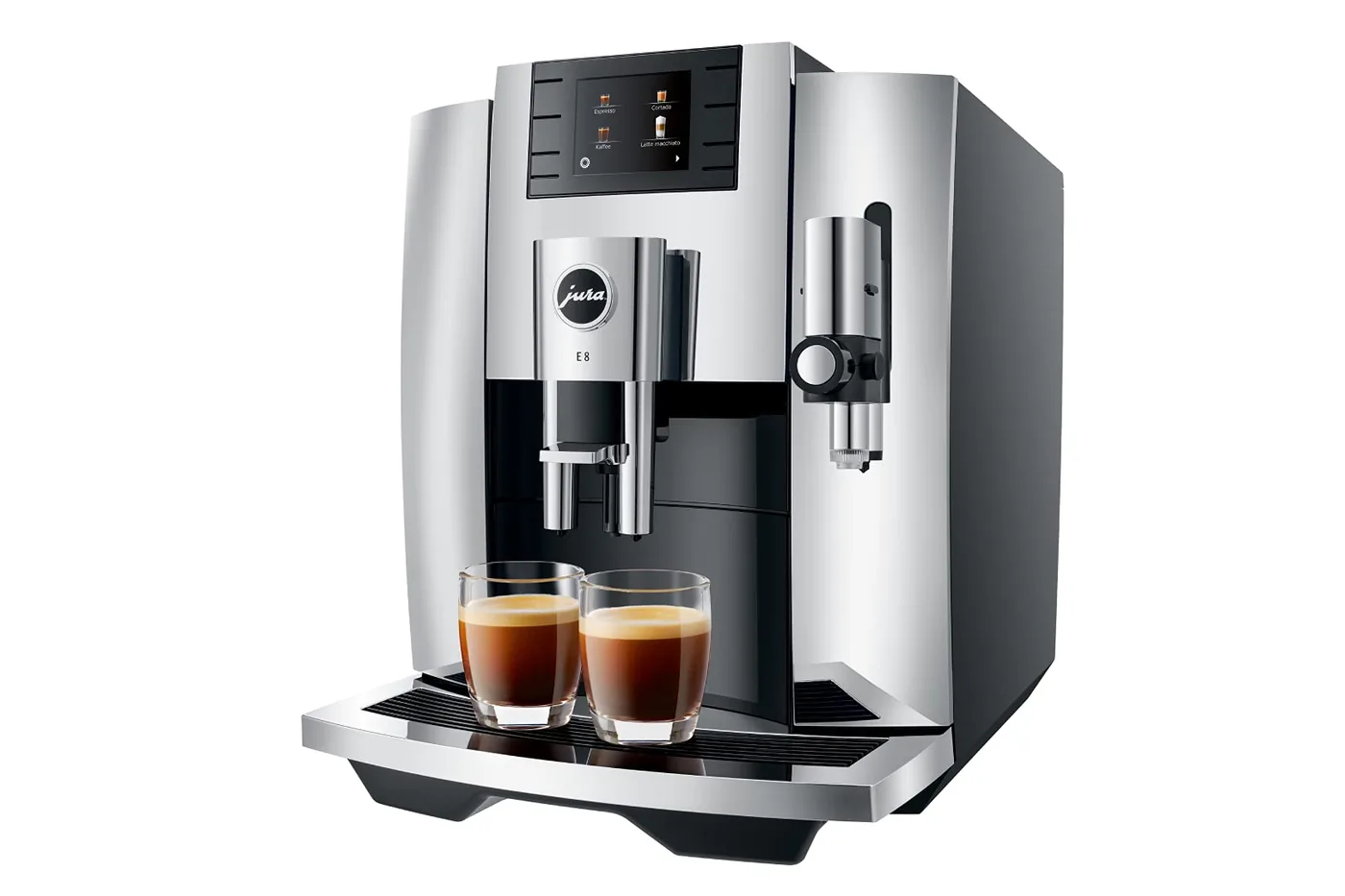
Jura E8 super-automatic espresso machine metal and high-grade plastic with built-in grinder
03 · Best cup quality at one press

Jura E8

4.5(61) 6.9/10

The closest a bean-to-cup machine gets to a shot you would be happy with from a café, with a fine-foam frother and a height-adjustable spout that suits a proper cup rather than a demitasse. It costs what it costs, and the argument for it is that it makes the drink you actually want without you learning anything, day after day, for years.

The shortlist

Every machine we have reviewed that belongs here

Ranked for this guide: ease of use leads, with milk performance and how easy the machine is to keep clean close behind, because a one-touch machine that is a chore to maintain stops getting used. The editor score is the site-wide weighted score, the same one on every review.
#MachineEaseUpkeepEditor
01 Philips 3200 Series LatteGo Super-Automatic 99 6.7
02 De'Longhi Magnifica Evo Super-Automatic 97 6.7
03 Jura E8 Super-Automatic 98 6.9
04 De'Longhi Eletta Explore Super-Automatic 97 6.5
05 Nespresso Creatista Pro by Breville Capsule 98 6.2
Put these side by side

How to choose

Choosing one you will still like in three years

Count the parts in the milk system

This is the single best predictor of whether a super-automatic ages well. A two-part carafe that comes off and rinses under a tap gets cleaned every day. A system with internal tubes and an automated cleaning cycle gets skipped on the days you are late, and skipped milk systems sour, block and eventually need servicing. Fewer parts, fewer excuses.

Ask whether the brew group is removable

A removable brew group can be rinsed under the tap weekly, which keeps coffee oils from going rancid inside the machine. Sealed brew groups rely on automated rinse cycles and a service visit when that is not enough. Neither approach is wrong, but a removable group puts the machine's lifespan in your hands rather than a technician's.

Burr material changes the coffee more than the drink menu does

Ceramic burrs stay cooler and dull more slowly than steel, which matters in a machine that grinds directly into the brew chamber seconds before extraction. Meanwhile the difference between a machine offering eight drinks and one offering fifty is mostly software: most households settle on two or three drinks within a fortnight.

Water hardness decides your maintenance schedule

Scale is what kills these machines, and how fast it builds depends on your water rather than the brand. A machine that takes a water filter, and an owner who actually replaces it, can go many times longer between descalings. If your water is hard and you ignore this, you are choosing a shorter life for an expensive appliance.

Measure the depth, then measure it again with the lid up

Super-automatics are deep, and many fill the bean hopper and the water tank from the top. Under a wall cabinet that means a machine you pull forward twice a day, which is precisely the friction you bought a one-touch machine to avoid. A front-loading water tank is worth looking for.
If you want the coffee to be a hobby

A super-automatic will never let you change the grind mid-shot, taste the difference and change it back, because the whole design exists to remove those decisions. If that sounds like the fun part rather than the chore, the guide for learning properly is the page you want.

FAQ

Common questions

Is super-automatic espresso as good as a manual machine?
No, and the gap is smaller than enthusiasts claim. A good bean-to-cup machine makes a consistently decent drink every time. A semi-automatic in practised hands makes a better one, and in unpractised hands makes a worse one. You are buying the floor rather than the ceiling.
How much cleaning does a super-automatic really need?
Rinse the milk system after every session, empty the grounds container and drip tray as prompted, rinse the brew group weekly if it removes, and descale on the machine's schedule adjusted for your water. Perhaps two minutes a day and ten minutes a week.
How long do these machines last?
Cared for and descaled, many years. Neglected, they fail early and the causes are dull: scale in the boiler and milk residue in the tubes. The maintenance is not optional, it is the price of the convenience.
Can I use flavoured or oily dark roast beans?
Avoid flavoured beans entirely, since the coating clogs the grinder and the chute. Very oily dark roasts can also bridge in the hopper and gum up the burrs. Medium roasts with a dry surface are what these grinders are designed around.
Are capsule machines a better option than a super-automatic?
For one or two drinks a day with no maintenance appetite, capsules are consistent and genuinely convenient, with an ongoing cost per cup and no control over the coffee. A super-automatic grinds fresh beans, costs less per cup and asks for the cleaning routine in return.