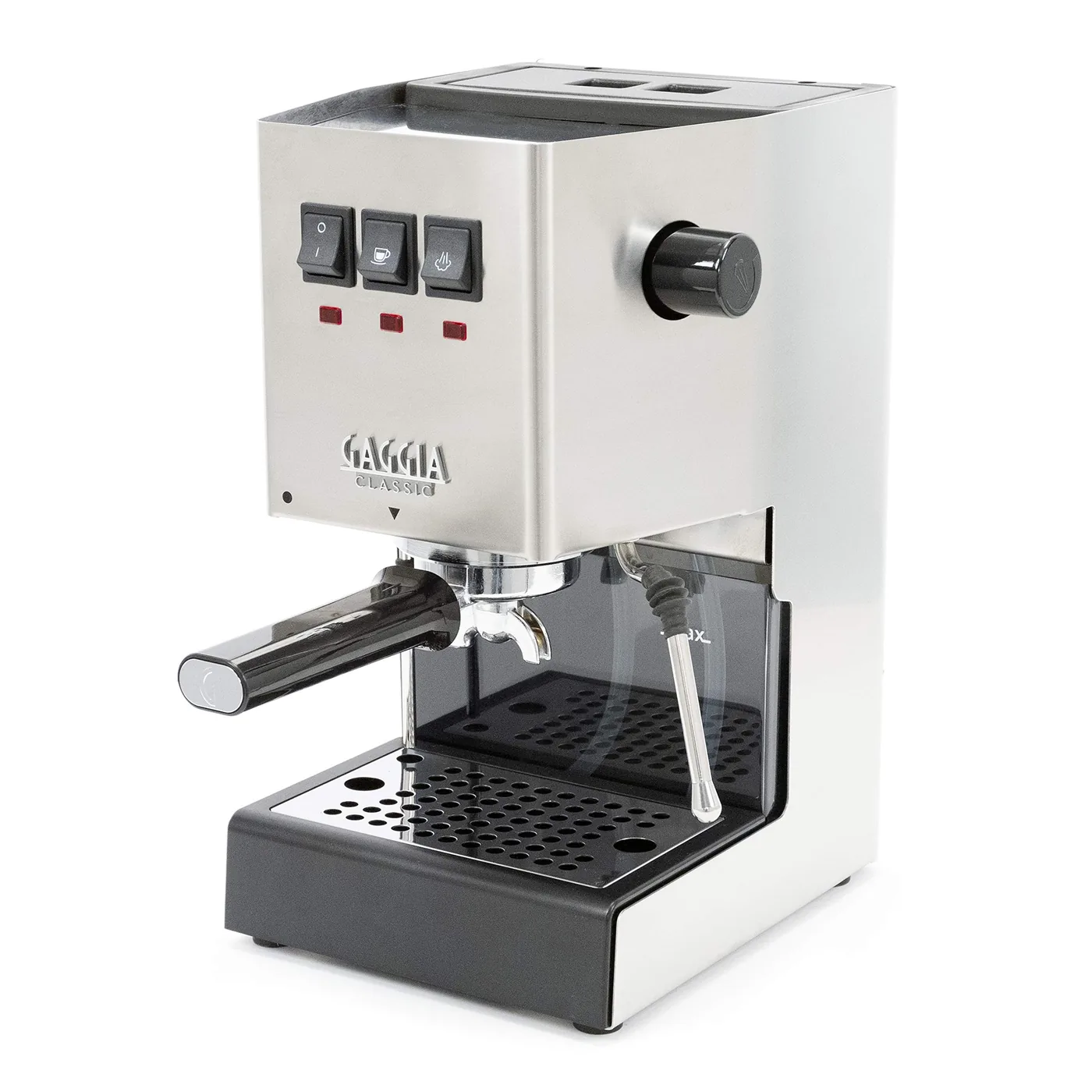
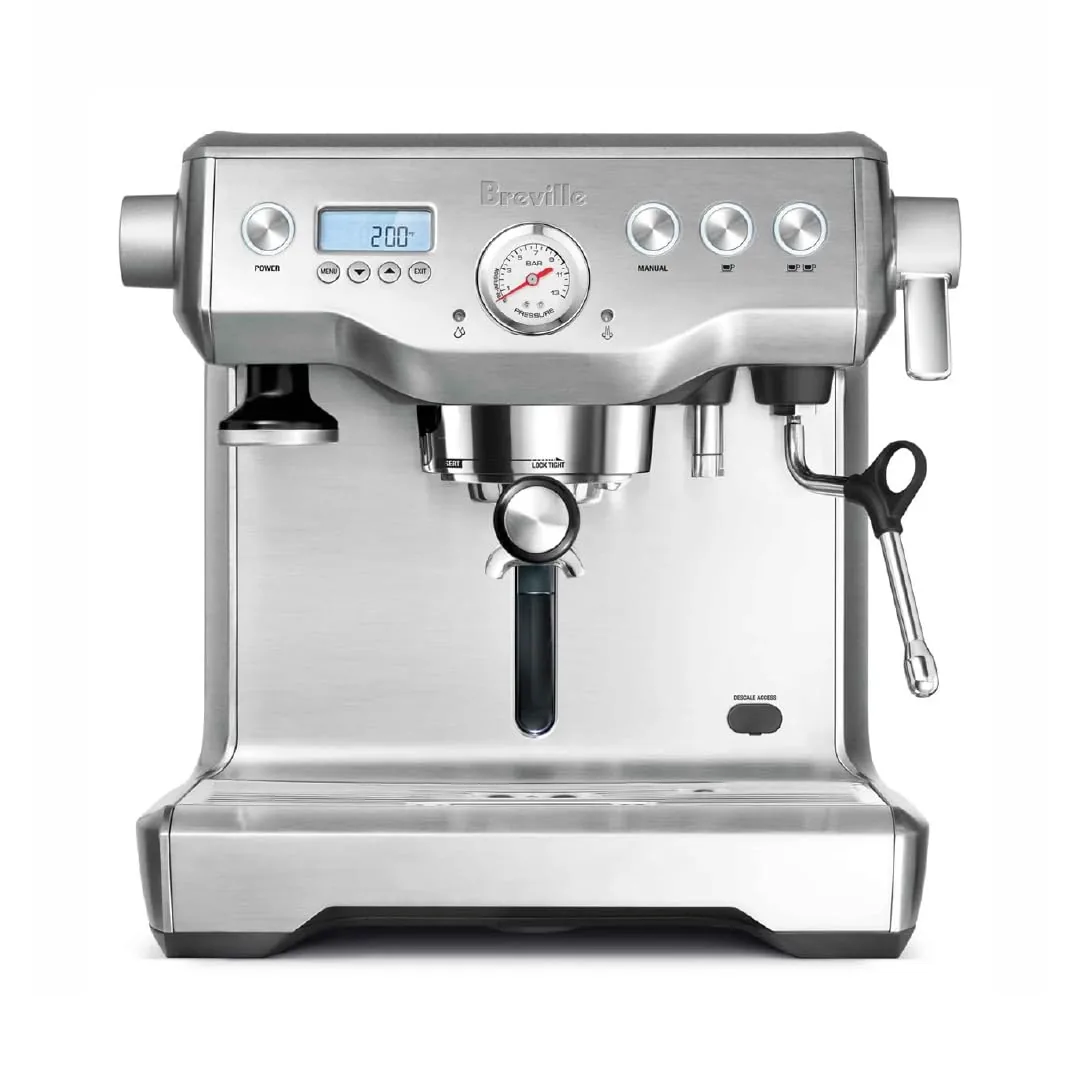
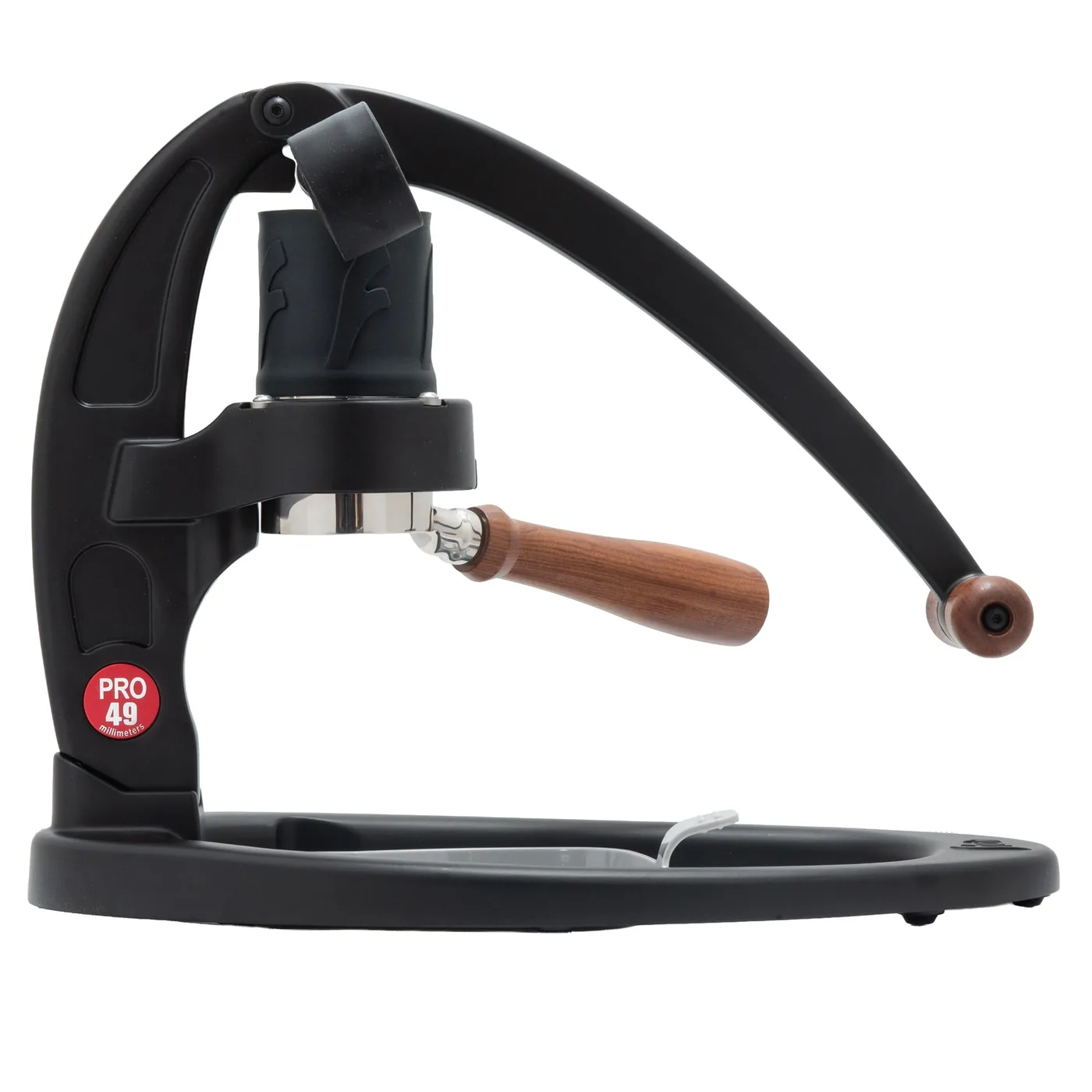
A standard portafilter keeps your options open
58 mm is the commercial standard, which means every precision basket, bottomless portafilter, distribution tool and puck screen on the market fits your machine. 54 mm works fine and has a decent aftermarket, just a smaller one. Proprietary sizes shut the door on all of it. If you expect to tinker, portafilter size is the most consequential number on the spec sheet.
Non-pressurised baskets are the entire point
A pressurised basket forces coffee through one small hole and manufactures crema whatever you do, which means the shot tastes the same whether your technique is good or terrible. You cannot learn from feedback you are not getting. A machine that takes single-wall baskets lets your grind and your tamp show up in the cup, which is uncomfortable at first and is how you improve.
Temperature stability is what makes practice meaningful
If the brew temperature drifts between shots, you change the grind, the next shot tastes different, and you have learned nothing because two variables moved. PID control, or a machine with enough thermal mass to hold steady, is what turns practice into a controlled experiment. Without it you are guessing with extra steps.
A bottomless portafilter is the cheapest teacher
It shows you exactly where the water is escaping through the puck rather than passing evenly through it, and channelling is invisible any other way. It costs very little, it fits any standard machine, and it will improve your shots faster than several hundred dollars of machine will. Buy one in the first month.
Budget the grinder as the main instrument
On a machine of this type the grinder is where most of the cup quality lives, because espresso is extracted in a narrow window that only a grinder with fine, repeatable adjustment can find. Spending heavily on the machine and lightly on the grinder is the most common way to build an expensive setup that makes disappointing coffee.